

COFFEE
A cup of coffee is not just a cup of coffee. It's a lifestyle and an attitude. Coffee Friends is not just about selling coffee. We hope to share a balanced way of life: balancing work and leisure, wealth and health, family and friends, consumption and sustainability, and more.
Coffee Friends particularly selects high-quality coffee beans from four different origins, including East- Timor, Guatemala, Yunnan China, and Sulawesi Indonesia, each with its unique flavor. In addition to these four premium coffees available regularly, we also seek out high-quality coffees from around the world for limited-time offerings to coffee lovers.
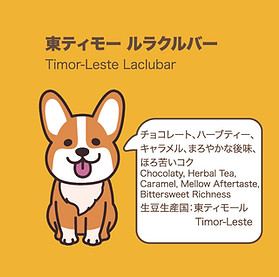


Timor-Leste Laclubar
Laclubar is a remote area high in the mountains of Timor-Leste where coffee trees have been growing wild for centuries. In 2012, the Hong Kong and Timor-Leste registered environmental protection NGO The Hummingfish Foundation (THF) started a community-based coffee project there. They educated and worked with the farmers to improve coffee quality with organic farming, production skills training and facilities. The farmers care for the natural environment. They refuse to use any chemical fertilizer and pesticide. They hand-pick and organically process each of the coffee beans.
Type: Arabica
Processing method: Washed
Roast: Full City Roast
Taste: Chocolaty, herbal tea, caramel, mellow aftertaste, bittersweet richness

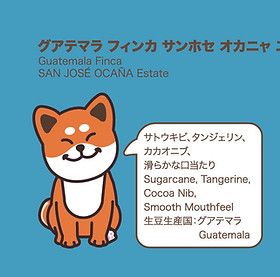
Guatemala San Jose Ocana
San Jose Ocaña Estate was established by Lazo in 1910 and has been over 100 years old.
The farm is in the middle of Guatemala. The altitude ranges from 1905 to 1955 meters above sea level. Its average annual rainfall is 1,400 millimeters.
The farm takes a highly technified conservative management approach towards the plantation. They use advanced tools to monitor and control plant wellness, while at the same time, purposefully implement strategies to avoid plant stress. They plant shade trees, mostly Grevillea or Silk Oak, with native tree species; biodiversity is always a priority.
As the farm relies on 2 small springs for processing, they are very conscious of the use of water. Coffee cherries are picked strictly at sugar beet-like color. They are then milled and washed in mucilage rich partly recycled water, which contains a rich concentration of fructose (coffee pulp sugars), before they are soaked in fresh water from the natural springs. The farm recycles about 75% to 80% of de-pulping water.
At disposal, the farm first let all organic matter to decant, then they use the water for growing grass pastures to feed cattle, of which the only purpose is to produce manure. They collect the manure for compost and feeding earthworms and then apply it to the soil as organic fertilizer for coffee plants.
The coffee parchment is sun dried until it reaches an ideal moisture level. The surface temperature of the parchment is carefully monitored during sun-drying. It will be covered by shade cloth if the temperature is too high.
Type: Arabica
Processing method: Double Soak, Cocoa Washed
Roast: Medium Roast
Taste: Sugarcane, tangerine, cocoa nib smooth mouthfeel

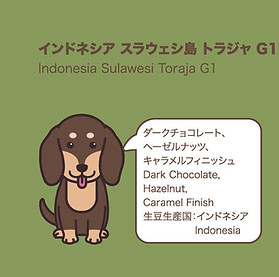
Indonesia Sulawesi Toraja G1
Indonesia's Sulawesi Island is the 11th largest island in the world. In its early history, it was known for its iron ore production, and the name "Sulawesi" is derived from the local combination of "Sula" (island) and "Wesi" (iron ore). It is one of Indonesia's well-known coffee-producing islands, with exceptional natural conditions and high iron content in the soil. Additionally, Sulawesi has ten active volcanoes, including Toraja, which contribute to the fertile volcanic, mildly acidic soil of this region. This unique environment results in the cultivation of high-quality coffee beans with distinctive flavors.
Coffee from this region is characterized by its rich nutty notes, low acidity, robust dark chocolate flavors, and a lingering caramel finish.
As early as 1750, the Dutch began cultivating coffee in this area. Toraja is not the name of a place, city, or variety of coffee; it refers to the Toraja people, an ethnic group living in the central mountainous region of Sulawesi who are skilled in coffee cultivation. Toraja coffee farmers prioritize quality and only harvest ripe coffee cherries, which extends the harvesting season.
The best batches of Toraja coffee are used for the Indonesian government to serve to dignitaries. These coffee beans are stored in hand-carved and painted wooden barrels, which are unique precious works of art.
Type: Arabica
Processing method: Washed
Roast: City Roast
Taste: Dark chocolate, hazelnut, caramel finish

China Yunnan Puer
In 1904, a French missionary came to Zhukula Village, Yunnan, and built a local-style church. Outside the church, he planted the first coffee tree, marking the beginning of a century of coffee cultivation in Yunnan.
Many people misunderstand that Puer is the name of tea, it is actually a place. The Yunnan Puer coffee is processed by washing method which retains the slight fruity acidity, rich but not bitter, and has both dark chocolate and Puer tea aromatic endnote, warm and smooth taste – a perfect blend of tea and coffee aromas.
Aside from its famous tea industry, Puer is also known as the "Coffee Capital of China". It is the largest coffee planting and producing area in the country and an important coffee trading and distribution center. The coffee industry has become one of the important distinctive agricultures of the Puer Plateau.
Type: Arabica
Processing method: Washed
Roast: Medium Roast
Taste: Puer tea-like, chocolaty, sugarcane


Coffee Cup
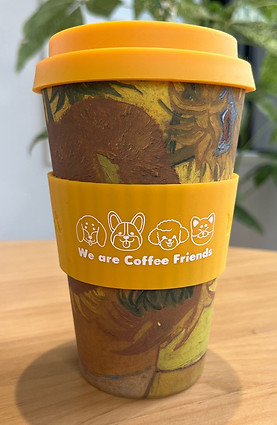
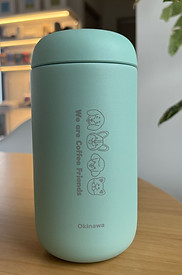
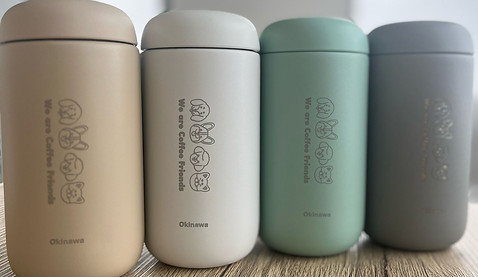
Coffee cups not only enhance the ambiance of coffee enjoyment but having your own "Takeaway Coffee Cup" also express your personal style. In addition to promoting environmental awareness, takeaway coffee cups are convenient to carry and can maintain temperature for extended periods. Coffee Friends collaborates with various well-known brands to jointly release coffee cup products in different designs and styles. Come and pick one to make your coffee moments even more perfect.


COFFEE PARTNERS
Colour Brown Coffee & Edwin Lee [Hong Kong]
Colour Brown is a specialty coffee roastery and cafe operator that connects sustainable coffee culture with industrial innovation for coffee enthusiasts and creative communities, founded in 2005 in Hong Kong.
With the belief in coffee as essence of everyday life, Colour Brown zealously connects coffee with environment, and further extends the concept to humanity, cultural and creative industries, as well as industrial innovation.By a host of cultural and creative collaborations, we hope to give impetus to the coffee industry in sustainable manner.
Owner of Colour Brown Coffee and founder of Coffee Power Championship, Edwin Lee, is a qualified CQI Coffee Q-Grader, authorized trainer of Specialty Coffee Association of Europe. He has judged over 100 coffee competitions. He enjoys roasting and always monitors a high coffee standard of Colour Brown Coffee.
Coffee Friends and Colour Brown Coffee share the same values, emphasizing environmental protection and a commitment to sustainable coffee culture practices. Coffee Friends is honored to partner with Edwin, who serves as the technical and roasting supervisor for Coffee Friends coffee products. All Coffee Friends coffee products are freshly roasted by Colour Brown Roastery, a subsidiary of Colour Brown Coffee.